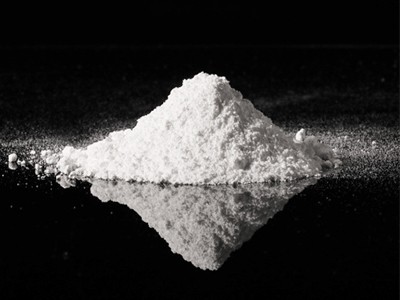
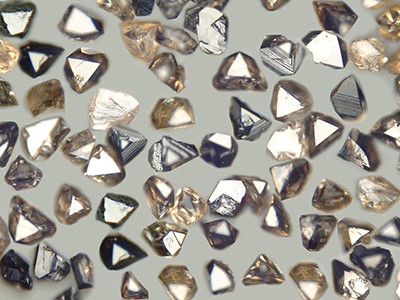
Hexagonal boron nitride (h-BN) has a structure similar to graphite and is known as "white graphite." It combines high thermal conductivity, electrical insulation, high-temperature resistance, and chemical inertness. The first barrier that decides where it can be used is often not its purity, but the particle size distribution of the powder.
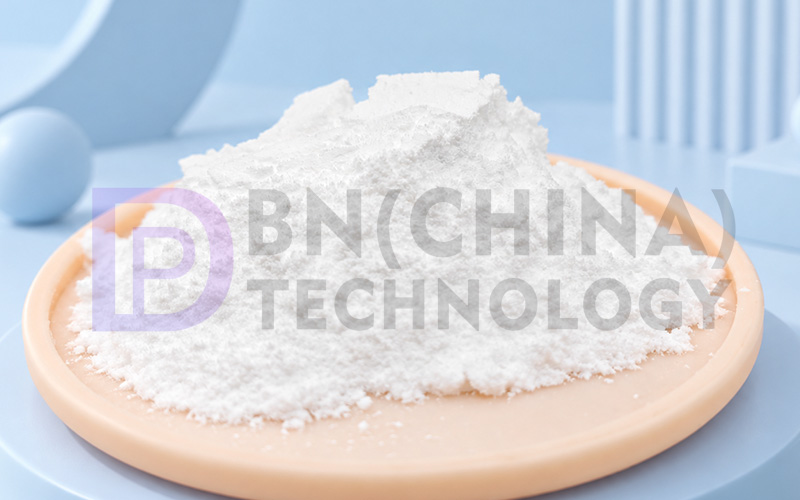
Two concepts need to be clarified first: powder particle size refers to the size of the agglomerates, measured with a laser particle size analyzer and characterized by the median particle size D50, the coarse end D90/D95, and the fine end D10; crystallite size refers to the size of an individual platelet and is observed under electron microscopy. The two are not equivalent — the D50 of a single batch may be only a few micrometers, while the platelets can grow to tens of micrometers. The larger the platelets, the fewer the grain boundaries and the weaker the phonon scattering, giving better thermal conductivity and lubricity; the smaller the platelets, the higher the reactivity, which favors sintering.
Graded by particle size, the applications divide clearly:
Nano-scale (<0.1 μm, commonly 50–100 nm): large specific surface area and high reactivity, used in nanocomposites, precision thermal interface materials, and lubricant additives; however, it agglomerates easily and requires surface modification together with vigorous dispersion.
Fine powder (0.1–10 μm): balances dispersibility and filling performance. A D50 ≤ 2 μm delivers high opacity and a soft-focus effect, a D50 of 6–8 μm improves brightness, and 12–16 μm gives a semi-transparent look — cosmetics rely on this to create different optical textures; it is also the mainstay of thermal grease, insulating thermal pads, and electronic packaging fillers.
Medium particle size (10–50 μm): a balance of flowability and filling capacity, serving as the dominant heat-conduction pathway in thermally conductive composites and as an additive for refractories and coatings.
Coarse particle size (>50 μm): good flowability and a small specific surface area; at high temperatures it forms a continuous lubricating film, making it suitable for high-temperature release agents, solid lubricants, and aluminum-coating layers on evaporation boats, as well as a sintering aid for ceramics.
In engineering practice, "micron + nano" blends are common: the micron particles build the skeleton while the nano particles fill the gaps and bridge between them, reducing interfacial thermal resistance. Clearly, particle size distribution is not merely a screening metric — it is the switch that steers the same material onto completely different tracks: heat dissipation, lubrication, release, or beauty care. When selecting a powder, beyond D50 one should also look at the width of the D10/D90 distribution and batch-to-batch consistency.