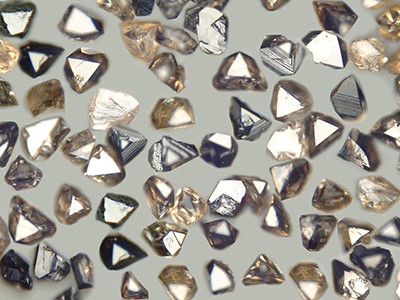
I. Hardness: From “Perennial Runner-Up” to “King of Hard Materials”
Cubic boron nitride (CBN) was first synthesized in 1957 by General Electric in the United States using ultra-high-pressure technology. Since then, it has stood shoulder-to-shoulder with diamond as one of the top superhard materials.
Conventional CBN has a Vickers hardness of HV 3200–4000 and a microhardness of approximately 70 GPa, second only to diamond.
What's even more remarkable is that CBN's hardness holds a hidden secret—it exhibits anisotropy: its Knoop hardness along the crystal orientation is approximately 4,600 kg/mm², while perpendicular to the crystal orientation it is 3,200 kg/mm². Nanoscale processing is the key to breaking through these limits: when particle size is reduced to 14 nm, Knoop hardness can reach 85 GPa; characteristic grains that maintain high strength can even be as small as 4 nm.
Polycrystalline cubic boron nitride (PCBN) has a hardness ranging from 2,700 to 5,000 HV. By adding 5% nanodiamond, its Vickers hardness can reach 47 GPa, with a fracture toughness of 4.89 MPa·m¹/² and a wear ratio as high as 6,350—figures sure to set any cutting tool engineer's heart racing.
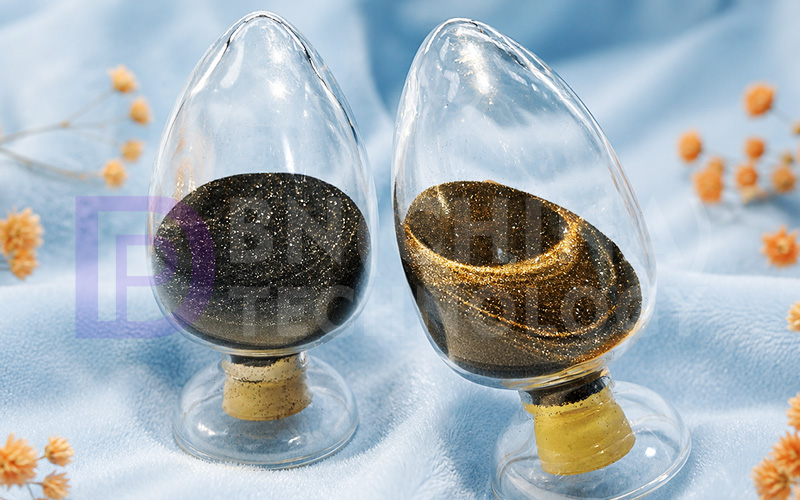
II. More Than Just Hardness: A Double Edge in Thermal Stability and Chemical Inertness
Diamond begins to “soften” and oxidize at 800°C—but what about CBN? It remains as solid as a rock in air at temperatures below 1,300°C and remains unfazed even at 1,550°C in a vacuum. Its thermal conductivity reaches as high as 1,300 W·m⁻¹·K⁻¹, which is 3 to 6 times that of cemented carbide!
Its most lethal trump card, however, is its chemical inertness toward iron-group metals—it does not react with iron, cobalt, or nickel even at high temperatures of 1,200–1,300°C. This means: while diamond dares not touch these ferrous metals, CBN welcomes them all.
III. Applications: From the Factory Floor to the Stars and the Deep Sea
In the field of grinding, CBN grinding wheels are used to machine hardened steel, bearing steel, and die steel, achieving a grinding ratio of 4,000:10,000—more than four times that of traditional abrasives.
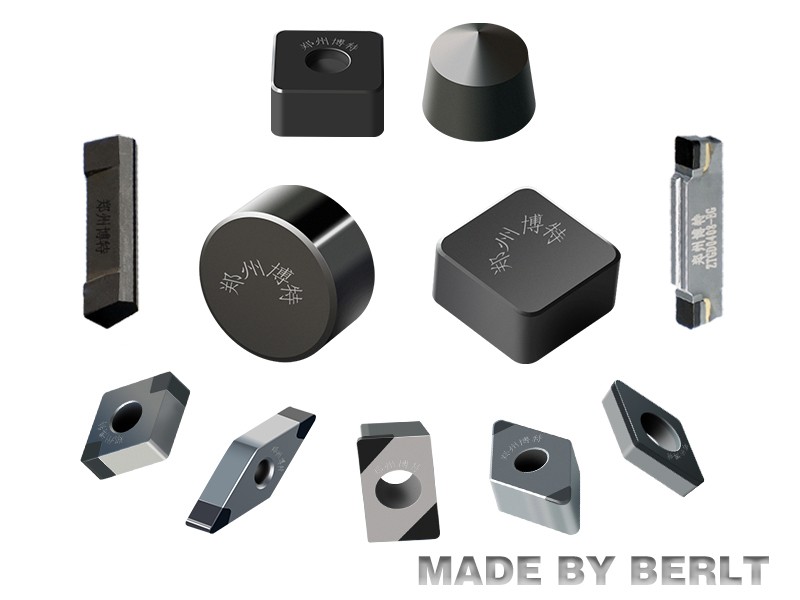
In the field of cutting, PCBN inserts are a revolutionary tool that enables“turning instead of grinding.”When machining hardened steel, cold-hardened cast iron, and nickel-based alloys, tool life is 3 to 5 times that of ceramics and 5 to 15 times that of cemented carbide, with surface roughness as low as Ra 0.3 μm and tolerances tightened to ±0.01 mm. Automotive universal joints, train wheels, and gearboxes—all fall under their sharp edges.
In cutting-edge fields—such as the machining of high-strength aerospace alloys, precision cutting of semiconductors, and the manufacturing of new energy components—CBN is making inroads across the board.
The province of Henan, China, single-handedly accounts for 95% of the nation's CBN output and contributes more than 70% of global industrial-grade production capacity. In 2024, the process for synthesizing cubic boron nitride single crystals using six-sided press machines was even added to the export control list—this is not merely a matter of technology, but one of strategy.