Batteries are getting bigger and charging faster, but one long-standing problem remains unsolved—overheating.
Hot smartphones, bulging electric vehicle batteries, fires at energy storage facilities… Behind all these incidents lies a single term: thermal runaway. Traditional lithium-ion battery separators made of polyethylene and polypropylene have low melting points; when temperatures rise, they shrink or even rupture, causing the positive and negative electrodes to come into contact and resulting in a short circuit. Although ceramic coatings offer some improvement, a thick coating increases internal resistance, while a thick coating leads to severe powder shedding; if the coating is too dense, it blocks the pores—no solution is perfect.
This is where hexagonal boron nitride (h-BN) powder comes into play.
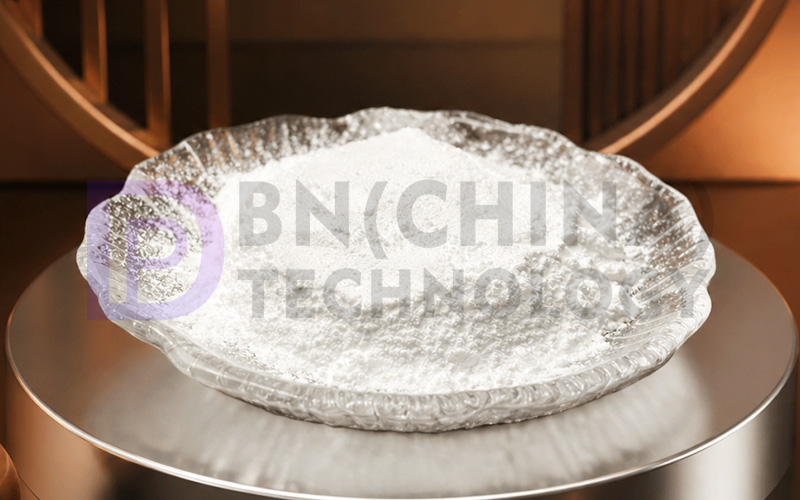
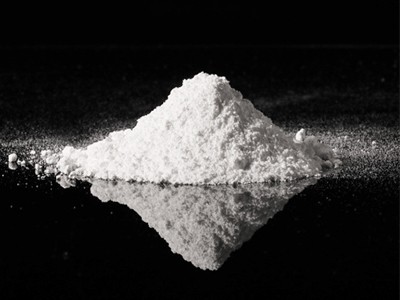
Hexagonal boron nitride, known in the industry as “white graphite,” is a white powder that feels as smooth as talcum powder to the touch. It has several key properties: rapid heat conduction, with in-plane thermal conductivity reaching 400 watts per meter per kelvin, and up to 6,000 watts per meter per kelvin when exfoliated into nanoplates; excellent electrical insulation, with a resistivity of 10¹⁴ ohm-centimeters, making it virtually impervious to current; and high-temperature resistance, sublimating only at 3,000 degrees Celsius in nitrogen—the temperatures inside a battery are nothing to it.
What can it do when added to a battery?
Most directly, it can be used as a coating. Applying a layer of hexagonal boron nitride to the surface of the separator prevents shrinkage or cracking at high temperatures and rapidly dissipates heat, preventing localized overheating. Because it is an insulator, it won’t cause short circuits due to electrical conductivity in the heat-dissipating material, making it a reliable choice for high-voltage battery packs.
Another approach involves using boron nitride nanotubes as separators. These tubes are thin and long, so they do not block the channels; they are also heat-resistant and insulating. Separators made with them offer excellent thermal conductivity and strong thermal stability, effectively reducing the risk of thermal runaway.
On a larger scale, hexagonal boron nitride is also used in heat sinks and thermal pads on the exterior of battery packs. When formed into thin films or embedded in silicone sheets, it is both thin and flexible, and can be backed with adhesive to be applied directly to battery modules, evenly dissipating heat. Currently, 5G base stations, new energy vehicles, and energy storage systems are all moving in this direction.
Of course, this material isn’t without its drawbacks. Hexagonal boron nitride powder is inherently “water-repellent,” making it difficult to disperse evenly when mixed with polymers, so modification is required. Furthermore, its thermal conductivity varies depending on orientation—it conducts heat quickly in-plane but slowly out-of-plane—so the particle orientation must be properly aligned during use; otherwise, performance will be compromised.
However, overall, hexagonal boron nitride powder is a material that genuinely solves the problem of battery heat dissipation. It is inexpensive, non-toxic, non-flammable, easy to store, and its industrial production is well-established.
For a battery to be safe, it must first be cooled down. Hexagonal boron nitride is the reliable solution that helps batteries “cool down.”