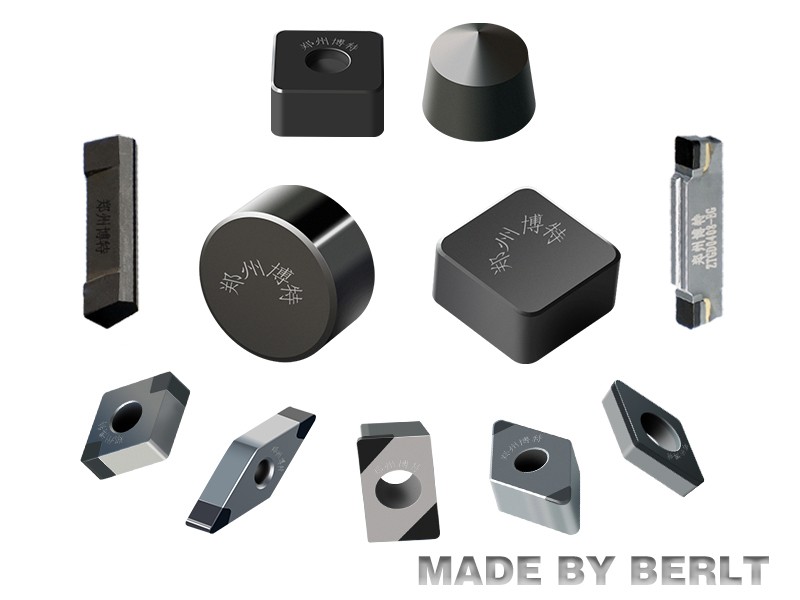
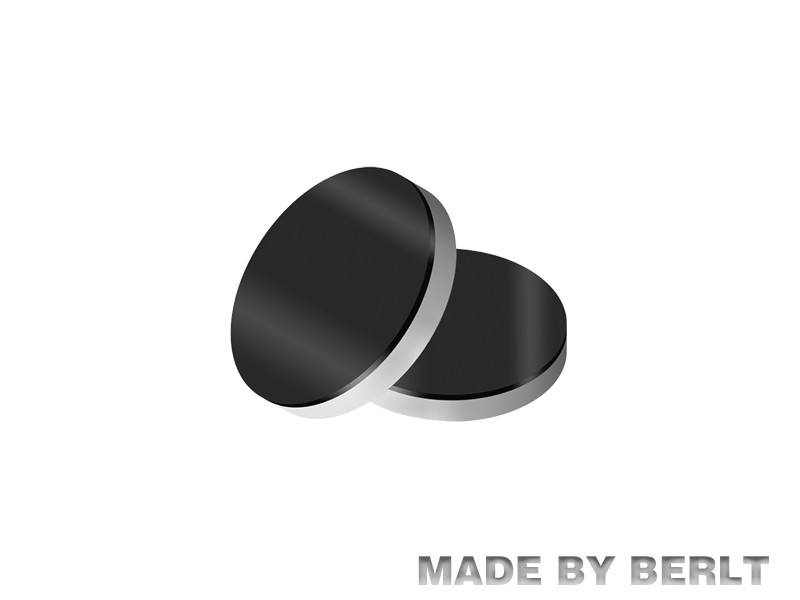
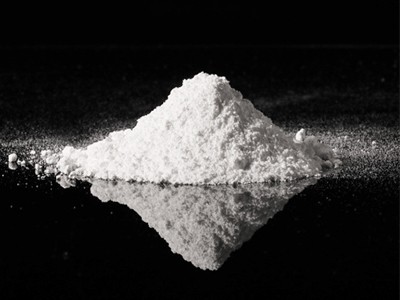
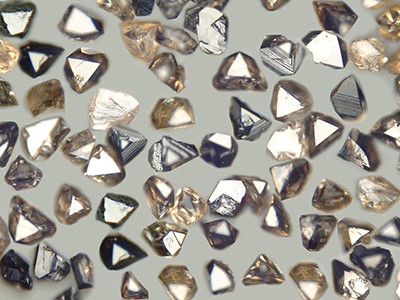
When it comes to superhard materials, the first thing that comes to mind is diamonds. That’s right—diamonds are indeed the hardest substance known to man. But diamonds aren’t the only superhard material; there are also synthetic variants such as polycrystalline diamond nanorods, chemical vapor deposition (CVD) diamond, and the focus of today’s discussion—cubic boron nitride, or CBN for short.
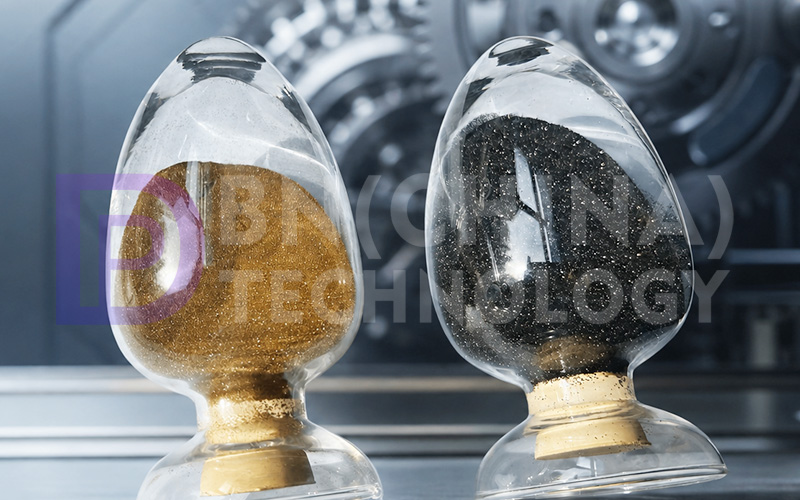
What is CBN?
In 1957, General Electric in the United States first used high temperature and pressure to transform hexagonal boron nitride into a cubic structure, thereby creating this material. Its crystal structure is very similar to that of diamond, and its hardness is second only to diamond, with a Vickers hardness ranging from 3,200 to 4,000 and a microhardness reaching up to 70 GPa. In 2013, scientists also produced nanoscale CBN, whose hardness reached 108 GPa—exceeding that of synthetic diamond.
What makes CBN so formidable? Let’s highlight a few tangible advantages.
First, high-temperature resistance. Diamond begins to oxidize and fail at temperatures above 700°C, whereas CBN remains rock-solid below 1,300°C and doesn’t undergo a phase transition until 1,550°C in a vacuum. For high-temperature machining, it’s far more reliable than diamond.
Second, it’s impervious to iron. This is CBN’s biggest trump card. When diamond is used to machine steel, the carbon reacts with the iron, causing chip adhesion and rapid wear. CBN, however, is completely chemically inert toward metals like iron, cobalt, and nickel. It is highly chemically stable. Therefore, when machining tough materials such as quenched steel, cold-hardened cast iron, and nickel-based alloys, CBN is the top choice. Its metal removal rate is 10 times that of diamond—and that’s no exaggeration.
Third, excellent thermal conductivity. CBN has a thermal conductivity of approximately 1300 W/m·K, which allows for rapid heat dissipation. This keeps temperatures in the cutting zone low, naturally extending tool life.
Fourth, it offers good toughness. Although single-crystal CBN suffers from anisotropy, when processed into polycrystalline CBN (PCBN), cracks propagate along grain boundaries, significantly improving toughness. This makes it suitable for turning tools, milling cutters, and drill bits.
How is it performing now?
A single company in Henan accounts for 95% of China’s total CBN production. In 2022, the domestic CBN cutting tool market reached 3.58 billion yuan, accounting for over 57% of the total superhard cutting tool market. In the automotive industry, milling has replaced grinding for universal joint processing, and CBN is also being widely used in the aerospace, bearing, and gear sectors.
In 2024, the process of synthesizing cubic boron nitride (CBN) single crystals using six-sided pressing machines was added to the export control list, indicating that this material is indeed of strategic importance.
To sum it up: Diamond may be the king of hardness, but CBN is the true king of machining ferrous metals. It doesn’t react with iron, withstands high temperatures, and offers fast machining speeds—these three qualities alone make it a formidable material.