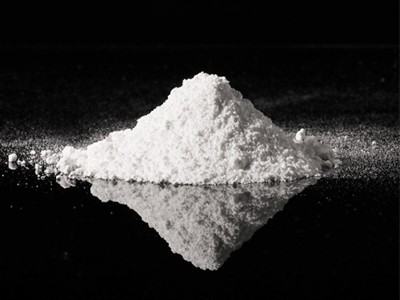
The rapid popularization of ultra-fast charging technology for new energy vehicles and large-scale energy storage power stations is pushing the requirements of battery thermal management to a new level. In the past, under the scenarios of slow charging and low-rate discharging of ordinary electric vehicles, conventional thermal conductive silicone pads could meet basic heat dissipation needs. However, with the increasingly common fast charging scenarios at 2C or even above 4C, the heat released by cells in a short period of time has increased significantly. Traditional thermal conductive materials can hardly simultaneously meet several core requirements including high thermal conductivity, full insulation, high temperature resistance and long-term stability. Relying on its unique layered crystal structure, hexagonal boron nitride (h-BN) powder has blazed a differentiated and practical path in the battery heat dissipation track.
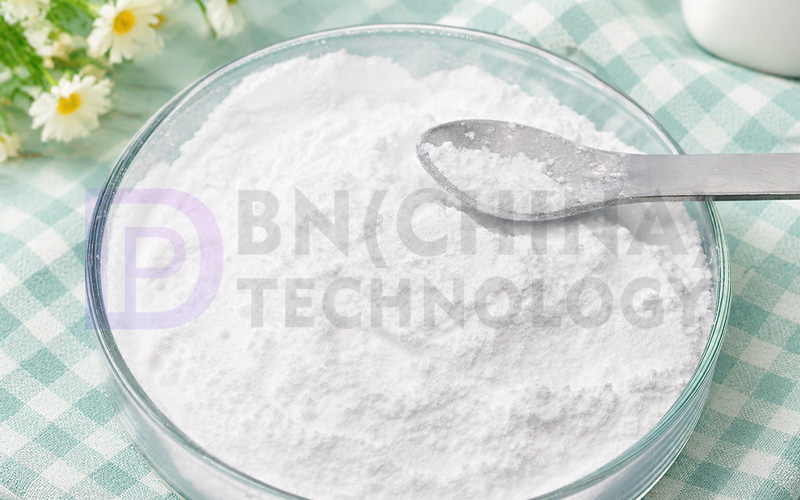
From the perspective of material properties, the in-plane of h-BN sheets is connected by high-strength covalent bonds, which enables highly efficient phonon transmission. Its in-plane thermal conductivity far exceeds that of conventional alumina thermal conductive fillers, and it can quickly flatten local hot spots on the cell surface to avoid heat accumulation to form temperature differences. After being processed by the spheroidization modification process, the filling rate of h-BN powder in substrates such as silica gel and epoxy resin can stably reach more than 60%. The powder particles can overlap with each other to form a continuous three-dimensional thermal conduction network, greatly reducing the interfacial thermal resistance between different materials, so that the heat generated by the cells can not only diffuse quickly in the plane, but also be smoothly exported to the heat dissipation structure along the vertical direction.
More critically, it has intrinsic insulation properties. The band gap of h-BN reaches 5.9 eV, which is far higher than the threshold of conventional insulating materials. It barely has free moving electrons, features a low dielectric constant and extremely low loss at high frequencies. When added into the thermal conductive insulating sheets between cells, tab protective layers and module potting adhesives, it can not only quickly conduct and dissipate heat, but also completely block current conduction. It fundamentally avoids the electric leakage and short-circuit risks that may be brought by metal-based thermal conductive fillers, and can simultaneously achieve dual protection of heat dissipation and insulation inside the battery pack with high-density layout.
Its environmental stability is also fully adapted to the full life cycle application scenarios of batteries. Its crystal structure can remain intact in an oxidizing environment below 1000°C. Under normal vehicle-mounted and energy storage working conditions, even if there is an instantaneous temperature surge during fast charging and impact of high and low temperature cycles, its thermal conductivity will not show obvious attenuation. It will not have side reactions with the electrolyte and adhesive inside the battery, and can stably function for a long time. At present, many leading power battery manufacturers have included modified h-BN powder into their mass-produced heat dissipation solutions. With the popularization of high-power battery systems, its application proportion in thermal management materials will be further increased.